









For most of my life, I thought being perfect was a good thing. I thought if I could do everything right, keep everything together, and show up the way I was supposed to, I could create happiness for the people I loved. I didn’t realize how much pressure I was putting on myself – or how deeply perfectionism had become part of my identity.
And then I became a photographer.
Photography gave my perfectionism a place to thrive. Perfect images. Perfect exposure. Perfect skin tones. A perfect website. A perfect Instagram feed. A perfectly curated brand. On the surface, it looked like excellence. But underneath it, I was using “pretty, polished, and perfect” to hide something that was much deeper.
This is one of the hardest parts of my story to share. But I’ve come to understand that some parts of our story aren’t just for us. They become part of our testimony so that someone else can hear them and realize they’re not alone.
When Pretty, Polished, and Perfect Became a Hiding Place
I want to be really clear about something before I go any further: I’m not blaming the photography industry for my perfectionism.
Photography didn’t create this problem in me. I brought it with me. But the industry gave me plenty of ways to feed it.
As photographers, we’re literally paid to make things look beautiful. We want the perfect image, the perfect lighting, the perfect skin tones, the perfect website, and the perfect Instagram feed. There’s nothing wrong with wanting to do beautiful work or serve our clients well.
But for me, perfectionism wasn’t just about wanting to do a good job. It was deep. I had an unhealthy relationship with perfectionism that went far beyond wanting to check things off my to-do list.
Looking back, I can see where it started. I had this belief that if I could be perfect…if I could do no wrong, if everything could always be the way it needed to be… then maybe I could create happiness for the people around me.
I couldn’t fix the things I couldn’t control, but I thought maybe I could at least make sure I wasn’t another problem.
That sounds like a noble thing.
It wasn’t.
Because eventually, I realized I was carrying things that were never mine to carry.
If someone was sad, overwhelmed, grieving, or struggling, I felt like I needed to fix it. I had to learn that I can love someone, support them, pray for them, and help them when I can – but I don’t have to carry their pain for them. And honestly, that’s something I still have to practice.
Healing hasn’t meant that I’ve “arrived.” I still have to recognize those old patterns when they show up. But now I can see them. And recognizing them has made a huge difference in my healing.
The Part of Perfectionism I Didn’t Want to See
One of the hardest things I’ve had to recognize is that perfectionism can actually be rooted in pride.
That one hurt, because I never thought of myself as prideful. But when I looked at what perfectionism was really saying, I started to understand.
My actions were essentially saying:
“If I don’t show up perfectly, everything falls apart.”
And who’s at the center of that statement? Me.
That’s the uncomfortable part. I can justify perfectionism all day long.
“I just want to serve people well.”
“This needs to look good.”
“People won’t receive it if it isn’t polished.”
“My clients deserve my best.”
But eventually, I had to ask myself: Does it actually have to be perfect? The answer was no.
Grief was a huge part of this realization for me.
At the end of 2025, my grandma passed away. It was the first time I had experienced losing someone I was that close to, and grief took me places I wasn’t prepared to go. It brought things to the surface that I hadn’t necessarily been ready to face.
But I’m grateful for what God did in that season. He used something incredibly painful to help me see things in myself that needed healing. And one of those things was the belief that I needed to be perfect – or that I needed to hold everything together.
I didn’t. I couldn’t. And I wasn’t supposed to.
I Don’t Have to Be Anyone Other Than Me
There was another layer of perfectionism that showed up in our business: trying to become someone else.
Early in our photography journey, we looked at photographers who were successful and thought, They figured it out. We should do what they’re doing.
So we did. Jon wore bow ties. I wore pink dresses. We changed our branding. We even intentionally designed our logo to look similar to the logo of photographers we admired because we thought, Obviously, this is how you become successful.
Looking back, it’s almost funny, but there’s something really sad underneath it, too…We weren’t being ourselves. We were trying to recreate somebody else’s success instead of figuring out what it looked like for us to build the business God had given us.
And I think a lot of entrepreneurs do this.
We see someone else’s website and think ours needs to look like that. We see their content and think we need to talk like them. We see their success and assume their strategy must be the strategy we’re missing. But learning from someone is different from becoming someone.
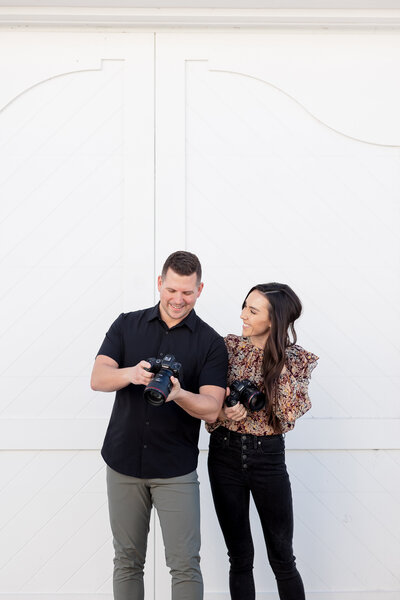
Over time, Jon and I started peeling back those layers. Jon realized he could wear a T-shirt and fishing shorts. I realized I didn’t need to dress or act a certain way just because I thought successful photographers were supposed to look that way. And the more we became ourselves, the more freedom we found.
That’s what I want you to know if you’re reading this and thinking, Oh my gosh, this is me.
You don’t have to be perfect to build a successful photography business.
You don’t have to hide the messy parts. You don’t have to pretend you have everything figured out. You don’t have to copy somebody else’s personality, brand, business model, or life.
You get to be you.
And I believe that’s actually where the impact starts, because people don’t need another perfect version of someone else.
They need the person God created you to be.
Key Takeaways
If you’re recognizing some of yourself in this, here are a few things I’m still learning:
- There’s a difference between excellence and perfectionism. I can care about my work without believing everything has to be flawless.
- Ask yourself what you’re trying to control. Sometimes perfectionism is really the belief that everything depends on us.
- Stop carrying what God didn’t ask you to carry. I can love and support someone without taking responsibility for fixing their pain.
- Learn from people without trying to become them. Their path isn’t your path.
- Pay attention to the lies you’re believing about yourself. Then ask God what is actually true.
- Let yourself be known. You don’t have to live behind a polished version of yourself to have an impact.
For me, saying goodbye to “pretty, polished, and perfect” hasn’t meant that I stopped caring about beautiful things or doing excellent work.
It means I don’t need those things to prove who I am, and that has been incredibly freeing.
If you’re a photographer, entrepreneur, or just someone who’s exhausted from trying to hold everything together, I hope you’ll listen to Episode 7 of Beyond the Camera. This conversation is one of the most vulnerable parts of my story, and my prayer is that it helps you recognize where perfectionism might be keeping you from the freedom God has for you.
You don’t have to become perfect. You get to become who you were created to be.
Listen to Episode 7 and subscribe to Beyond the Camera for more honest conversations about faith, photography, business, purpose, and building a life that’s bigger than your portfolio.



Comments +